

Preparing Your Dog for a Successful Vet Visit: A Behaviour Veterinarian's Guide
The anticipation of a vet visit often evokes anxiety in both canines and their owners. However, with preparation, these appointments can become positive experiences for everyone involved.
In this blog, we'll outline the importance of preparing your dog for vet visits and provide practical tips to streamline the process. From establishing pre-visit routines to packing essential items, our goal is to ensure a seamless experience at the clinic. Additionally, we'll discuss valuable skills you can teach your dog to promote cooperation during veterinary procedures. By fostering these behaviours, you can contribute to a more efficient and comfortable visit for your pet and veterinary staff.
So why invest in preparation?
Beyond alleviating your pet's anxiety, proactive measures can help prevent defensive behaviours, including aggression, during exams. Our aim is to cultivate a positive association with the clinic environment, fostering ease and familiarity.
Throughout this guide, we'll emphasize the importance of recognizing signs of fear, anxiety, and stress in your dog. With this awareness, you can provide the necessary support to help your pet feel at ease during their visit.
Whether you're a seasoned pet owner or new to the journey, our guide is here to help. By implementing these strategies, you can ensure that vet visits are met with calmness, cooperation, and improved well-being for your beloved companion.
Checklist of Items to Bring Along
When preparing for a trip to the vet clinic, ensuring you have the right supplies can make all the difference in your dog's comfort and demeanour:
- Collar or Harness and Lead: Bring whichever your dog is accustomed to for walks. Additionally, if your dog is comfortable with a Halti, consider bringing one along.
- High-Value Treats: Cut into small pieces or a portion of their meal. These treats can be invaluable for encouraging positive behaviour during the visit.
- Poo Bags: Set up your dog for success by allowing them to toilet before going into the clinic.
- Their Mat or Bed: Bringing along their familiar mat provides a sense of security and comfort, helping them feel more at ease in unfamiliar surroundings.
Additionally, you may find these useful:
- Visual Aid Vest: If your dog is uneasy around other animals or people, a visual aid vest or leash cover can ask for space.
- Muzzle: A well-fitted muzzle that your dog has been conditioned to.
En Route to the Clinic & In the Waiting Room
- Restraint in the car: Ensure your dog is safely secured in the car to prevent injury in the event of sudden stops or accidents. A harness attached to a seatbelt is a recommended option. If they get overstimulated, a covered crate may be better.
- Toilet Break: Allow your dog to relieve themselves before leaving home and again before entering the clinic.
- Anti-Nausea Medication: If your dog experiences nausea in the car, ask your vet about suitable anti-nausea medications to make the journey more comfortable.
- Choose a Quiet Space: Find a corner away from other animals to minimize stress, especially if your dog is uncomfortable or excitable around unfamiliar dogs or cats.
- Focus on Rewarding Calm Behaviour: Use your dog's mat and reward them for staying calm and relaxed while waiting.
- If they struggle with the waiting room: Ask your vets if you can wait outside or in the car.
Skills to Focus On at Home
- Basic Cues: Cues such as sit, down, paw, and nose touch can be helpful when introducing them to a stranger or doing procedures.
- Go to Mat: Teaching your dog to go to a designated mat or spot can provide them with a familiar and comforting space.
- Chin Rest: Teaching your dog to rest their chin on your hand or another surface can facilitate easier examinations of their head and mouth by the vet.
- Muzzle Training: Training your dog to wear a basket muzzle can be invaluable, especially if they become anxious during certain procedures. Dogs need to be conditioned to wear a muzzle prior to visits and have positive associations with wearing one. Have a look at Muzzleupproject.com for videos and fitting advice.
- Body Handling: Practice gentle body handling at home (holding head, lifting lips to examine teeth, running hands down their back, handling paws).
- Restraint: Familiarize your dog with gentle restraint techniques, such as being lifted onto a table or held in place.
- Equipment Familiarization: Introduce your dog to common veterinary equipment, such as scales, clippers and stethoscopes.
Canine Body Language & Communication
Recognizing signs of fear, anxiety, and stress is crucial. Please avoid punishing communication signals like growling — growling is a valuable communication signal for dogs. Punishing a dog for growling can lead to escalated aggression without warning.
Recommended Body Language Resources:
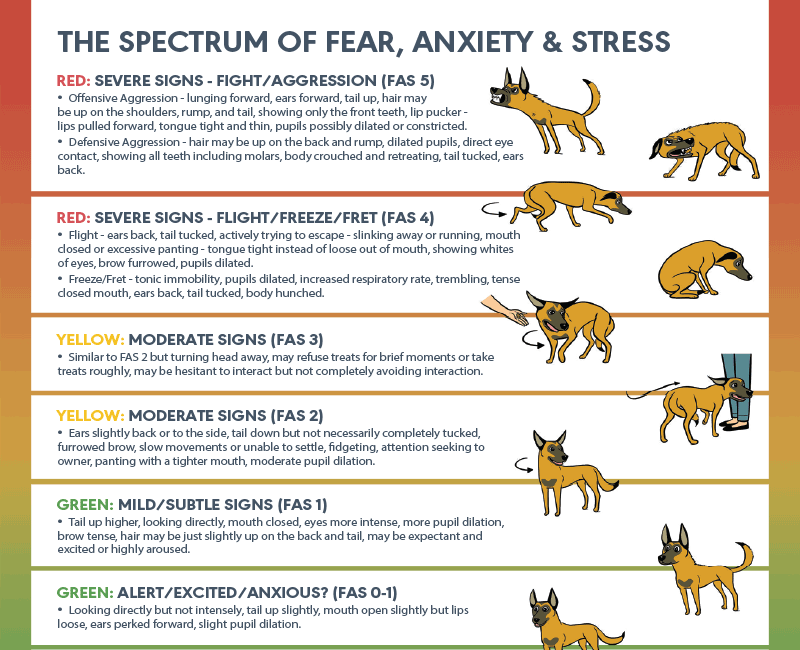
Fear Free Pets Spectrum of Fear, Anxiety, and Stress in Dogs
Cooperative Care Training
Cooperative care training is an approach that empowers dogs to actively participate in their own care, veterinary procedures, and grooming tasks by teaching them to willingly engage in the process through positive reinforcement and voluntary participation:
- Consent Cue or Start-Stop Button: Teach the dog a consent cue or start-stop button indicating they have the choice to participate or opt-out. If the dog shows signs of discomfort, respect their choice and pause.
- Desensitisation: Introduce procedures gradually and systematically, starting with simple tasks before progressing to more complex ones.
- Positive Reinforcement: Reward desired behaviours with treats, praise, or play to create a positive association and build trust.
Need behaviour help for your animal?
Consultations available in-person across North Island and via online consultation NZ-wide.
Related Articles


